Bionic materials for tumor cardiology research
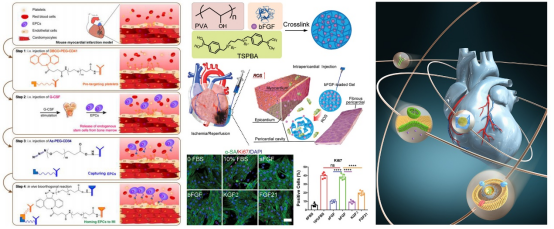
With the improvement of cancer treatment, the survival time of malignant tumor patients is significantly longer. However, the problem of cardiac damage caused by antitumor treatments such as radiotherapy, chemotherapy, immunotherapy, and surgery has become increasingly prominent. Oncology cardiology was born with the aim of establishing a prevention and control system for oncology cardiology and assessing the underlying risk factors before antitumor treatment. The development of oncology cardiology can provide risk assessment, diagnosis and treatment for patients in order to actively carry out research on the mechanism of cardiac injury caused by tumor treatment as well as the prevention and control system. In recent years, bionic materials have shown broad development prospects in tumor treatment and tissue repair. The group is dedicated to use the advantages of bionic materials to solve the problem of myocardial toxicity caused by tumor radiotherapy and immunotherapy and to explore the mechanism of tumorigenesis and cardiac disease development.
Engineered cell vesicles for myocardial tissue regeneration and tumor therapy
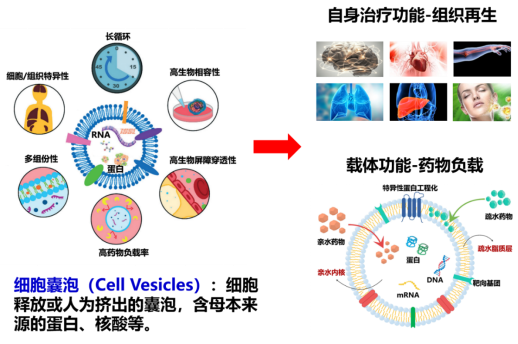
Cellular vesicles are cell-derived nano-vesicles that have been widely used as delivery carriers for therapeutic reagents such as chemical drugs, proteins, and nucleic acids. Compared with conventional nanodrug carriers, cellular vesicles are similar to synthetic nanocarriers in size and function, but have the advantages of low toxicity, non-immunogenicity, and good permeability as natural endogenous transport carriers. In addition, cell vesicles retain part of the parent cell proteins, nucleic acids and other bioactive macromolecules, and cell vesicles from different sources are specific enough to deliver active molecules to target cells and regulate the biological functions of tissues and organs. Therefore, cell vesicle-based drugs have promising applications in the diagnosis of major diseases and targeted drug delivery. The group has designed and developed several specific cellular vesicles and engineered cellular vesicles for the treatment of major diseases such as neocoronary pneumonia, myocardial infarction and tumors. The group will further expand the application of engineered cell vesicles and strive to achieve large-scale production of cell vesicles and conduct clinical translational research.
Photosynthetic Bacterial Tumor Therapy and Tissue Engineering Research
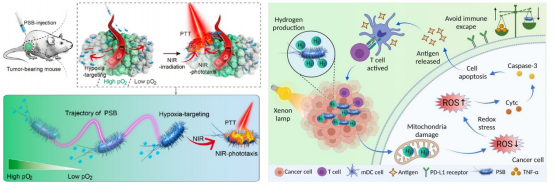
Microorganisms as living drugs have unparalleled advantages over nanomaterials, both in tumor therapy and tissue engineering. Photosynthetic bacteria are parthenogenic anaerobic prokaryotes with a primitive light energy synthesis system. They are non-pathogenic and non-toxic and have both NIR repellent ability. In 2021, the group first discovered that Pseudomonas marsh red, a photosynthetic bacterium, possesses good photothermal effects without external modification, and has lack of oxygen targeting and near-infrared repellent ability. Subsequently, the antioxidant properties of photosynthetic bacterial metabolites were utilized for wound healing studies. The group will further carry out a series of antitumor and tissue engineering studies with photosynthetic bacteria.